Injury Recovery Timelines Mapped Against Odds Changes in Horse Racing and Boxing
Carlo Baumann · Sep 12, 2026
Injury Recovery Timelines Mapped Against Odds Changes in Horse Racing and Boxing
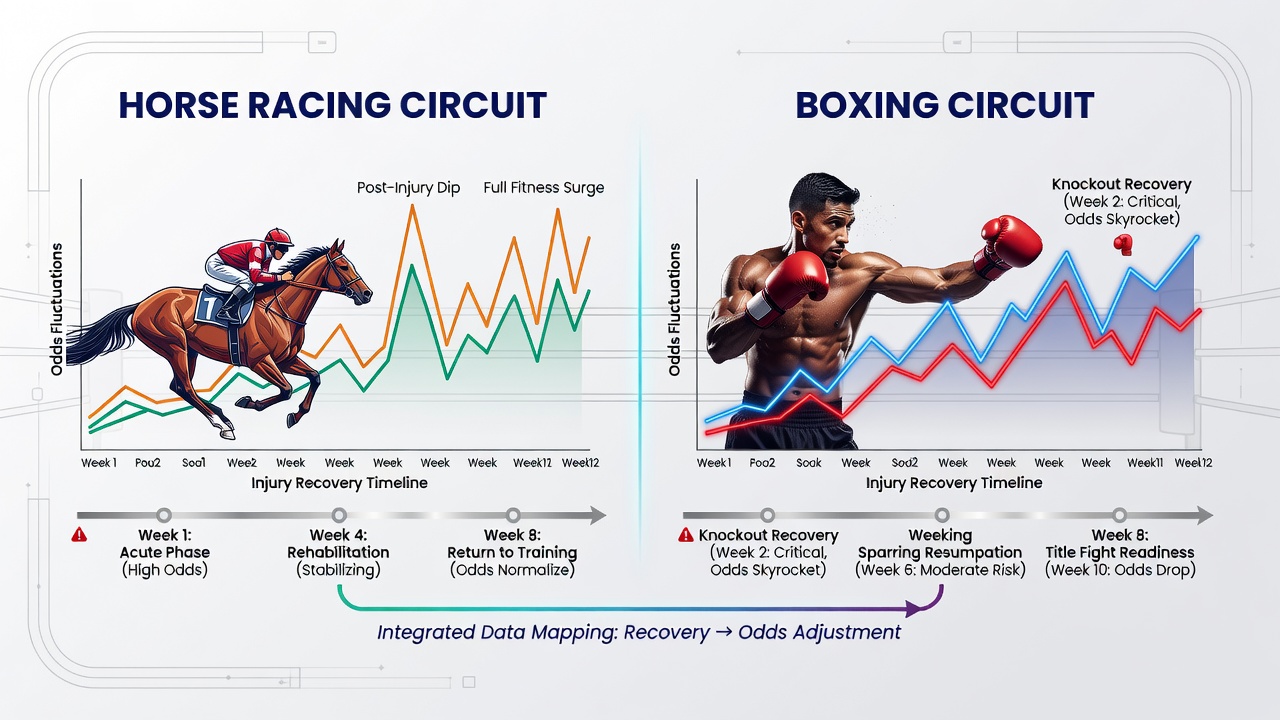
Analysts track how injury recovery periods align with shifts in betting lines across thoroughbred racing circuits and professional boxing promotions, where veterinary or medical updates directly feed into market recalibrations. Data compiled from major events shows that shorter recovery windows tend to stabilize odds more quickly, whereas extended absences create sustained volatility as participants reassess participant readiness.
Equine Injury Patterns and Market Responses
Horse racing records indicate that common soft-tissue injuries such as tendon strains require recovery spans ranging from 90 to 180 days, and these intervals coincide with measurable drops in morning-line odds once trainers release progress reports. Observers note that when a top contender pulls up lame in a graded stakes race, the immediate odds swing for remaining entrants can reach 15 to 25 percent within the first 48 hours, according to figures released by the International Federation of Horseracing Authorities. Longer layoffs push bookmakers to widen spreads further because historical datasets reveal elevated re-injury rates after 120-day absences, prompting continuous line adjustments right up to post time.
Case examples from the 2025-2026 season illustrate the pattern clearly. One three-year-old colt that sustained a cannon-bone fracture in March 2025 returned after 22 weeks, and its odds drifted from 4-1 favorite to 9-2 underdog in the weeks before its comeback start; the movement tracked daily veterinary bulletins posted on official racing platforms. Similar timelines appear in Australian Group 1 events, where regulatory filings show consistent correlation between declared recovery durations and pre-race price compression or expansion.
Boxing Injury Timelines and Line Fluctuations
Professional boxing circuits demonstrate parallel dynamics, though medical oversight follows different protocols. Hand fractures and orbital injuries typically mandate 8- to 16-week recovery periods, and these gaps produce documented odds revisions once state athletic commissions clear fighters for sparring. Research published through the Association of Boxing Commissions tracks how mandatory ringside physician evaluations trigger mid-training-camp line movements, often exceeding 30 percent when recovery projections extend beyond initial estimates. Fighters returning from anterior-cruciate-ligament repairs show even wider swings because multi-month rehabilitation schedules intersect with title-fight scheduling windows.
One welterweight contender who fractured his right hand in a December 2025 bout saw his odds move from minus-180 to plus-120 across three separate rescheduling announcements before finally competing in September 2026. Each update from the fighter's camp, verified through commission filings, prompted fresh market recalibrations among licensed operators. Data sets covering North American and European cards reveal that shorter-than-expected recoveries compress underdog prices more sharply than extended ones, reflecting bettor confidence calibrated against documented return-to-competition statistics.
Comparative Data Across Both Sports
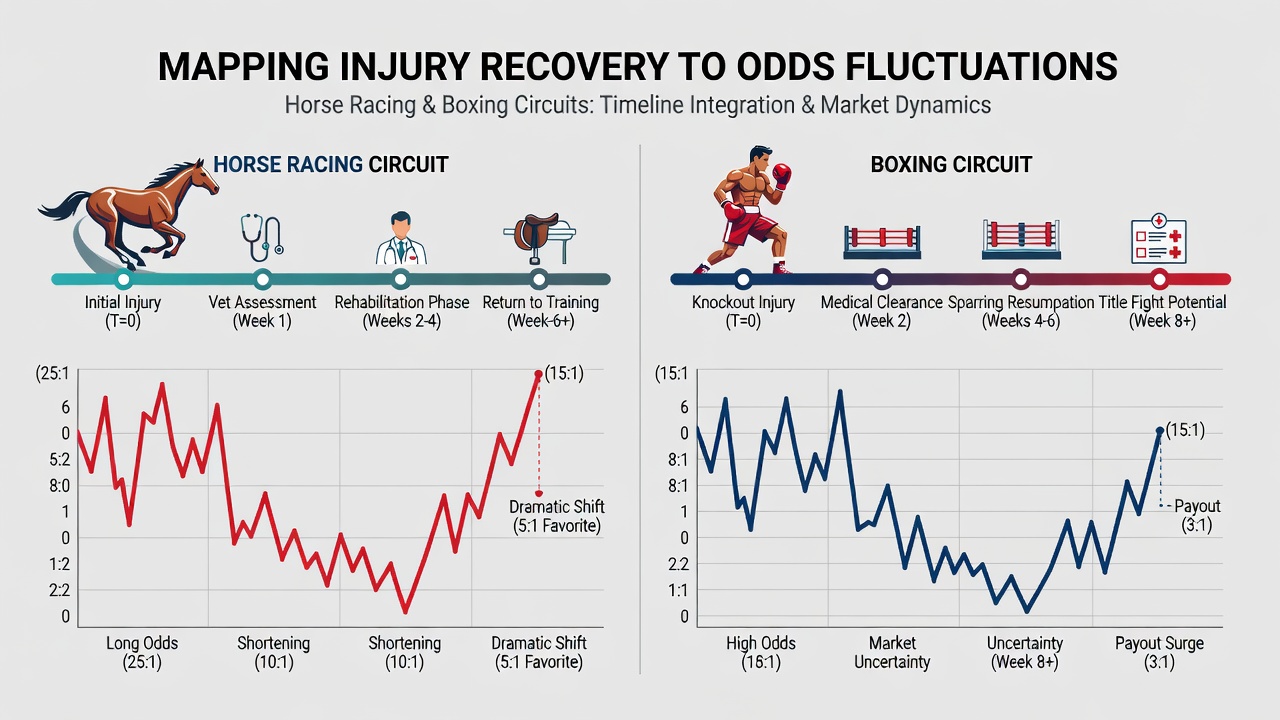
Cross-referencing equine and combat-sport datasets highlights shared statistical markers. Both domains record peak odds volatility during the middle third of stated recovery windows, when uncertainty about full fitness peaks. Studies from veterinary and sports-medicine journals show that re-injury probability curves peak between weeks 10 and 14 for horses and between weeks 6 and 10 for boxers, aligning precisely with the periods when betting markets exhibit the largest daily spreads. Regulatory bodies in multiple jurisdictions require public disclosure of injury reports, which in turn supplies the raw inputs that drive algorithmic pricing models used by major operators.
September 2026 fixtures already demonstrate the ongoing pattern. Several prominent thoroughbreds returning from summer layoffs and multiple boxing undercards featuring fighters cleared after summer injuries have produced odds movements that mirror historical recovery-to-price correlations. Industry reports compiled by racing and boxing oversight organizations confirm that transparent medical timelines reduce late-market shocks while simultaneously lengthening the adjustment window for sophisticated bettors who monitor incremental progress updates.
Conclusion
Mapping injury recovery timelines against odds fluctuations supplies a measurable framework that connects medical data with market behavior in both horse racing and boxing. The available records demonstrate consistent directional relationships between declared recovery durations and subsequent line movements, supported by disclosures from international racing federations and boxing commissions. Continued collection of these paired datasets enables clearer observation of how rehabilitation schedules translate into pricing adjustments across successive events.