Altitude Variations and Their Influence on Athletic Performance Indicators in Multiple Sports
Carlo Baumann · Aug 26, 2026
Altitude Variations and Their Influence on Athletic Performance Indicators in Multiple Sports
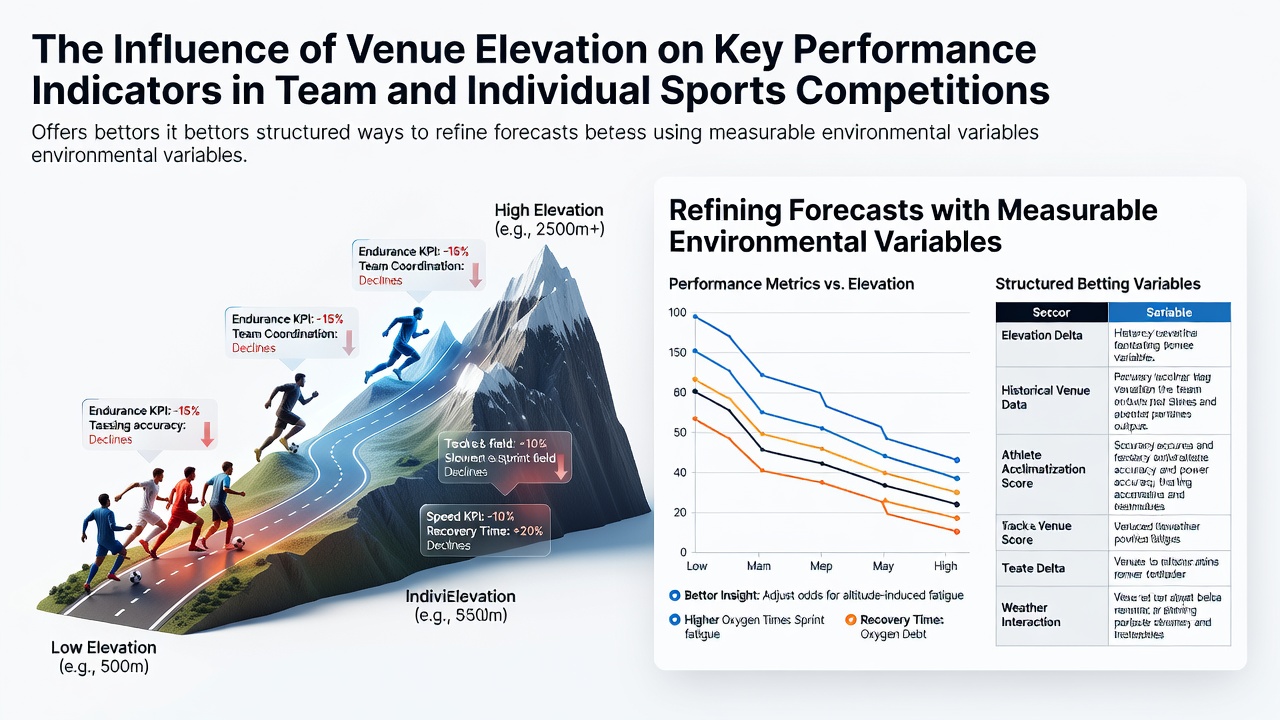
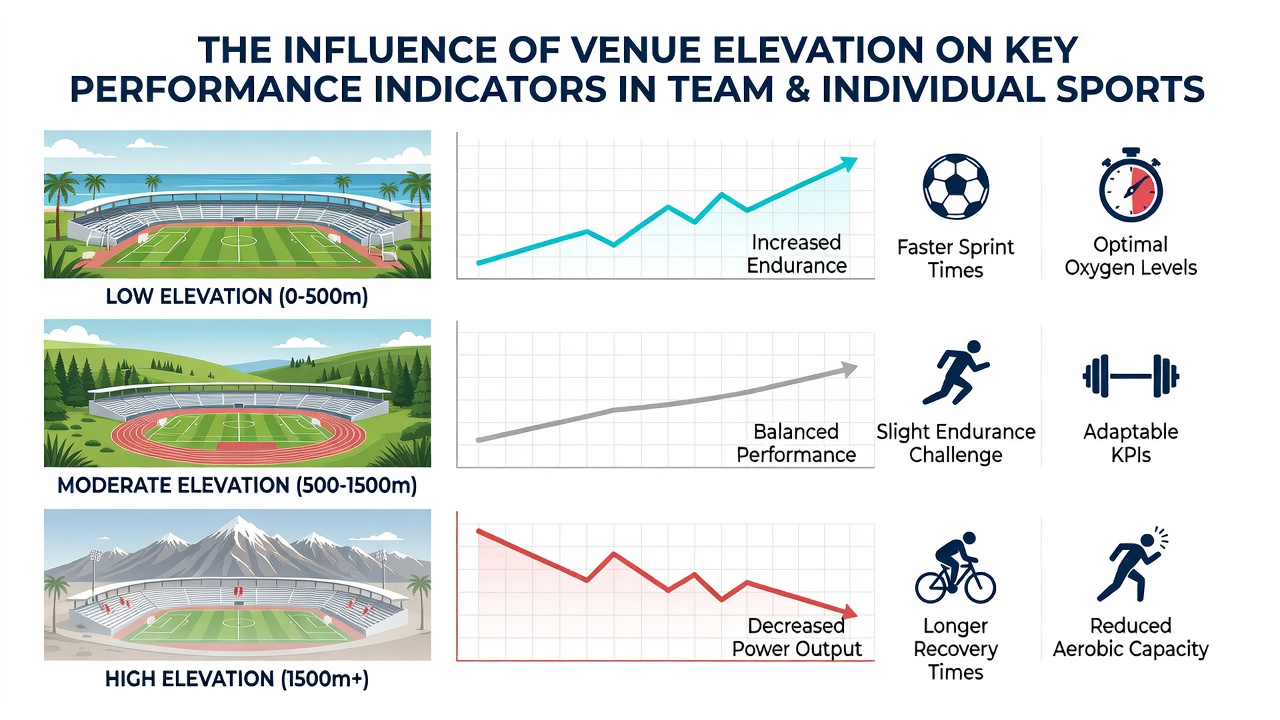
Venue elevation introduces measurable changes to oxygen availability and air density that directly alter key performance indicators across team and individual sports, and researchers have documented these patterns through decades of competition data from locations ranging from sea level venues to highland stadiums above 2,000 meters. Athletes experience reduced oxygen uptake at higher elevations which slows recovery between intense efforts while also affecting ball flight trajectories in sports like soccer and tennis because thinner air creates less drag on projectiles.
Physiological Responses to Increased Elevation
Human bodies adapt to lower partial pressure of oxygen by increasing breathing rates and heart output yet these adjustments prove insufficient during prolonged activity since studies from the Australian Institute of Sport reveal that endurance capacity drops by roughly 10 to 15 percent for every 1,000 meters gained above sea level. Power-based actions such as sprinting or jumping suffer less immediate decline because they rely more on anaerobic systems yet repeated bursts still accumulate fatigue faster when recovery oxygen remains limited. Observers note that acclimatization over several days improves red blood cell production but most traveling teams arrive with limited preparation time which leaves performance gaps visible in match statistics.
Effects on Team Sports Competitions
Football matches played in highland cities like Quito or La Paz demonstrate clear shifts in passing accuracy and total distance covered because players tire earlier and maintain lower average speeds throughout the second half. Data collected from South American league fixtures shows visiting sides from lowland regions concede more goals after the 60-minute mark while home teams capitalize on sustained pressure that exploits reduced aerobic reserves. Basketball contests at venues above 1,500 meters record fewer three-point attempts late in games since shooting percentages decline alongside increased error rates on fast breaks. Hockey games in similar conditions reveal shorter shift lengths as players rotate more frequently to manage breathing effort yet overall shot volume remains comparable until the final periods when accumulated oxygen debt becomes decisive.
Coaches adjust tactical plans accordingly by emphasizing shorter possessions and quicker transitions in the opening quarter before fatigue patterns emerge and historical records from leagues with regular altitude exposure confirm these adaptations produce measurable improvements in expected goal models and possession retention metrics.
Impact on Individual Athletic Disciplines
Distance runners face the steepest challenges at elevation since events beyond 800 meters show consistent slowing of 3 to 5 percent per 1,000 meters of ascent according to aggregated results from international track meets. Sprinters experience minimal change in 100-meter times because anaerobic power dominates yet 400-meter performances begin to reflect oxygen limitations in the final straight. Cyclists competing in mountain stages record lower power outputs on sustained climbs while benefiting from reduced air resistance on descents which creates trade-offs visible in stage time splits and overall classifications. Tennis players at altitude venues produce higher serve speeds because the ball travels farther with less drag although rally lengths shorten as players struggle to sustain intensity across multiple exchanges and match data from tournaments held in the Andes region confirms these patterns hold across both singles and doubles formats.
Environmental Variables and Performance Forecasting
Analysts incorporate elevation data alongside temperature, humidity, and acclimatization status to refine statistical models that predict changes in key indicators such as total distance covered, shot accuracy, and recovery intervals. Research compiled by Canadian sports science groups indicates that combining elevation with travel distance and schedule density yields stronger correlations with outcome probabilities than elevation alone. As August 2026 approaches and several international competitions schedule matches at mid-altitude sites, updated datasets from recent seasons provide clearer benchmarks for how teams and athletes respond under specific environmental loads. These measurements allow precise adjustments to baseline expectations without relying on subjective assessments.
Conclusion
Venue elevation remains a quantifiable factor that consistently modifies performance indicators across disciplines and competition organizers continue to document its effects through standardized testing protocols and statistical tracking systems. The patterns established by existing research provide reliable inputs for forecasting models that account for environmental conditions alongside athlete preparation levels and tactical approaches.